Hidden Escape Attic – Holland
By Roger Stanton
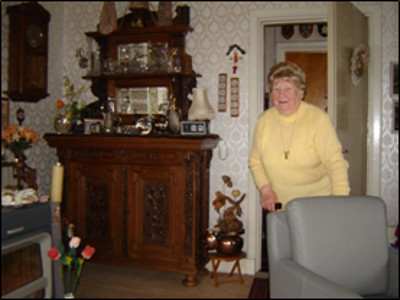 In 2013, an escape attic was rebuilt in the war museum in Hengelo, eastern Holland. The original hide had been constructed inside the family home of ELMS member Mia Lelivelt. Her father, Martin Lelivelt, was a dedicated member of the Dutch Resistance who gathered in evading aircrew, escaping POWs and other fugitives. Hidden in the secret attic until their onward movement could be arranged, many of those men eventually reached England thanks to the family’s courage. Betrayed to the Gestapo, Martin was taken to Camp Vught, tortured, and executed on 25 July 1944. After the war his street was renamed Martin Lelivelt Straat and the British Government awarded him the MBE for his work.
Jean Moaning of the Achterhoeks 1940–1945 Museum and museum owner Thomas Schroer visited Mia’s house to search for the original hide. No access points were visible, but after pushing and probing the timber, a concealed panel loosened and they discovered the cramped space. Unable to remove the attic, they decided to recreate it in the museum, enlisting local schoolboys to rebuild the hide so future generations could understand how fugitives were sheltered.
 Today, the Lelivelt escape attic is the focal point of the museum. Visitors pass displays of occupation life—documents, uniforms and resistance memorabilia—before reaching the reconstructed hide and a video testimony from Mia. She explains how she assisted her father, maintained a diary of sheltering days in Keijenborg and preserved keepsakes from those tumultuous years.
Martin’s bravery ensured dozens of aircrew evaders survived. The hide was ingenious; when the Germans searched the house after the betrayal they found nobody. Nevertheless Martin was taken away and executed. With no grave to visit, the museum attic stands as Mia’s memorial to her father. She recalls the discipline that kept everyone safe: no men’s washing on the line, shopping in distant villages, careful use of lights, silent routines for toilets. Every day required planning.
The family were betrayed by Willy Markus, a notorious Dutch collaborator who infiltrated the resistance as a so-called V-man. Guided through every room of the house, the Germans still failed to discover the fugitives but arrested Martin anyway. Mia still lives in the house and remembers handing her father the timber and nails as the attic was built when she was fifteen. Dozens of evaders hid there before moving down the line toward freedom.
Seven decades later, boys of the same age rebuilt the hide in the museum. They have their lives ahead of them, but they now appreciate the risks taken by ordinary families who believed in liberation. The Lelivelt attic stands in memory of Martin, Mia and the many helpers who chose to resist.
Thanks to Mia Lelivelt for sharing her story and to Ellen van Gilst for encouraging her to do so.