Edith Cavell 1885 – 1915
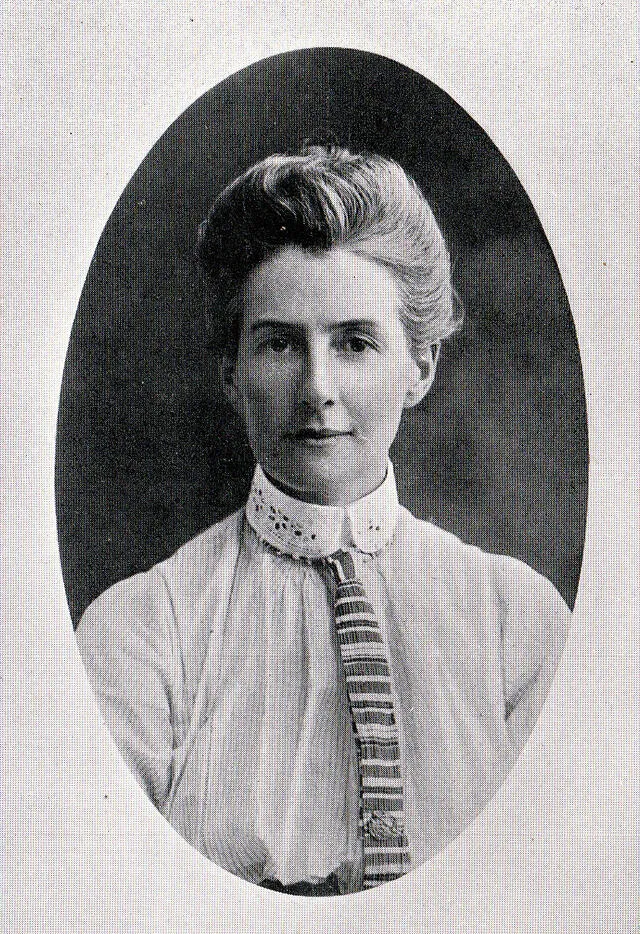
In 1865, in the small village of Swardeston in Norfolk, a lady was born who later was to influence many people on both sides of the channel, particularly Belgium. Edith Louisa Cavell was born in a Georgian farmhouse amidst the rolling farmland of Norfolk, where her father was curate of the village of East Carlton. No one at this early date could ever have imagined that her death would be mourned by the whole of the British nation together with many in Belgium, or that Queen Alexandra would have attended her funeral in Westminister Abbey. After attending The High School for girls in Norwich, and boarding schools in Peterborough, Bristol, and Kensington, Edith developed a strong interest in nursing. After several years as a governess Edith accepted a post in Brussels where she stayed for five years. In 1895, she returned to Norfolk to nurse her father through illness. In 1896 Edith began training at the London Hospital and was paid £10 a year, later moving to St Pancras, a Poor Law Institute for Destitutes, and in 1903 she became assistant Matron at Shoreditch Infirmary.
In 1907, Edith returned to the City she loved, Brussels, where she was put in charge of training nurses. Edith’s father died in 1910 and, in 1914 while back in Norfolk visiting her mother, news of war came. Edith quickly returned to Brussels. On arrival back in the city, she was immediately caught up in the war. The French and British armies - withdrawing from Mons - were cut off by the German advance. Two British evaders from the Cheshire Regiment found their way to Nurse Cavell’s training School and were given food and shelter. Many more followed and an escape line, between Brussels and Holland, began to emerge.
The main organisers of the line were the Prince and Princess de Croy and Phillipe Baucq. For their own safety Edith kept the line secret from her nurses, as it was common practice for the German army to shoot people assisting British soldiers. After a year in operation two members of the line were arrested. Five days later Edith was also arrested and interned in St Gilles Prison in Brussels. Her nurses were very upset and visited her taking roses to remind her of Norfolk and England. During her questioning Edith Cavell admitted her guilt in assisting escapers.
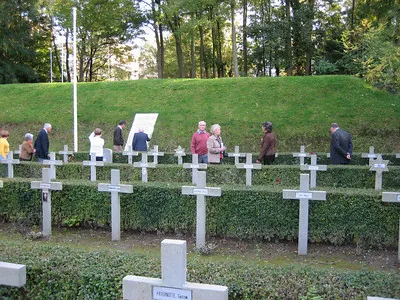
During her trial Edith remained calm and dignified throughout and despite many pleas in her defence, she and four other helpers on the line were sentenced to be executed at the Belgian National Rifle Range, the Tir National in Brussels. On her final morning, October 12th 1915, she rose at five o’clock. When the British Chaplain, Stirling Gahan came to see her, Edith spoke to him in a manner that summed up her character, saying: “But this I would say, standing as I do in view of God and eternity, I realize that patriotism is not enough. I must have no hatred or bitterness to anyone”. Gahan left the prison deeply moved, ‘I came to comfort her, and she gave me comfort,’ he said on leaving.
When asked for any last request, Edith asked for large safety pins to fasten her skirt around her legs so that she could die with dignity. At 0700 the death sentence had been carried out. It is thought that many of the German soldiers fired wide and that a Private Rammel, when ordered to fire, refused and was himself executed.
Edith Cavell was executed together with her fellow helper Phillippe Baucq. The grave of Pte Rammel was later found in 1919, between Edith Cavell and Phillipe Baucq. On May 15th 1919, Edith Cavell’s remains were returned to England for a ceremony at Westminster Abbey attended by Queen Alexandra and the Princess Victoria. At her family’s request, the coffin was then taken back to Edith’s beloved Norfolk where she was laid to rest outside Norfolk Cathedral - at Life’s Green.
Edith Cavell described herself as just a nurse, but to over 200 escapers and evaders whose lives she saved in one year, she was the heroine of Brussels from Norfolk.
There were 35 members of Edith Cavell’s helpers initially arrested, listed as follows by the German authorities:
- Philippe Baucq Brussels Architect (Belgian)
- Louise Thuliez Lille Schoolmistress (French)
- Constant Cayron Brussels Student (Belgian)
- Hermann Capiau Wasmes Engineer (Belgian)
- Edith Cavell Brussels Head Medical Institute (English)
- Auguste Albert Brussels Private Detective (Belgian)
- Ada Bodart Brussels Independent Means (Belgian)
- Louis Severin Uccle Chemist (Belgian)
- Albert Libiez Wiheries Barrister (Belgian)
- Georges Derveau Paturages Chemist (Belgian)
- Aguste Joly Wiheries Miner (Belgian)
- Louise Ladriere Wiheries Miners Wife (Belgian)
- Maurice Crabbe Mons Chemist (Belgian)
- Marthe Crabbe Mons Chemists Wife (Belgian)
- Georges Hostelet Uccle Engineer (Belgian
- Michel Cavenaile Wiheries Chemist (Belgian)
- Celine Cavenaile Wiheries Primary School Teacher (Belgian)
- Jenne Dubuisson Wiheries Seamstress (Belgian)
- Julie Vandermergle Wiheries Market Woman (Belgian)
- Anne Richez Wiheries Miners Wife (Belgian)
- Jeanne de Belleville Montigny Independent Means (France)
- Francois van Dievoet Brussels Innkeeper and mason (Belgian)
Princess Marie de Croy Bellignies pres Bavny Independent Means (Belgian)
- Paul Godefroy Brussels Jeweller (French)
- Phillipe Rasquin Brussels Coffeehouse Keeper (Belgian)
- Maurice Pansaers Brussels Coffeehouse keeper (Belgian)
- Oscar Mathieu Mons Coffeehouse Keeper (Belgian)
- Josephine Honroez Flour Manufacturer (Belgian)
- Francois Crapez Montignies Miner (Belgian)
- Marie-Clair Libiez Wiheries Carrier (Belgian)
- Etienne Lemaire Wasmas Miner (Belgian)
- Adolophine Sovet Brussels Proprietor of Café (Belgian)
- Adolphe Demonstier Mons Barrister (Belgian
- Armand Heuze Brussels Barrister (Belgian)
All of the above were arrested by the Germans between Jul/Sept 1915 and charged with conveying soldiers to the enemy. The HQ of the line at the Chateau de Bellignies, in the Forest of Bellignies, was also blown.
In 1939, Mlle Marie-Madeline Bihet, held the same position previously held by Edith Cavell in 1915. By 1940, Bihet and her nurses found themselves assisting evaders and, in those dark days, it is surely no coincidence that many of the nurses who had been trained by Edith Cavell in her nursing school were supporting and assisting British soldiers in Brussels. They remembered Nurse Cavell, the English nurse, and she became an inspiration to them all.
As the war progressed other similarities were apparent. Many of the Comète Line couriers were trained nurses. St Gilles Prison had cells housing members of an escape line. The Tir National was again in use as a place of execution.
On the 20th October 1943, Comète had its worst tragedy. Twenty-eight years after Edith Cavell’s execution, nearly to the day - on the 17th October one man was executed, then ten more were executed on the 20th. Their crime? Assisting allied escapers and evaders. Like those arrested in 1915 many helpers came from Brussels, others from the small mining town of Wiheries, and once again the helpers emanated from all walks of life. In later round-ups further arrests and executions were to take place.
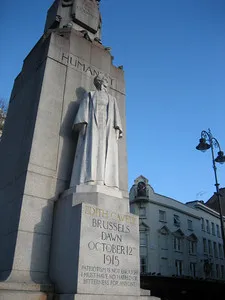
Near Trafalgar Square in London stands the large Memorial to Edith Cavell. Sadly, it is hardly noticed by passers-by, its most frequent visitors today are pigeons. It is, however, visited by ELMS for short remembrance and wreath laying ceremonies.