2007 - Retrace of the Comete Line Route - R Frost
Retrace of the Comète Line Route
Royal Air Force Staff Ride (1 –13 July 2007)
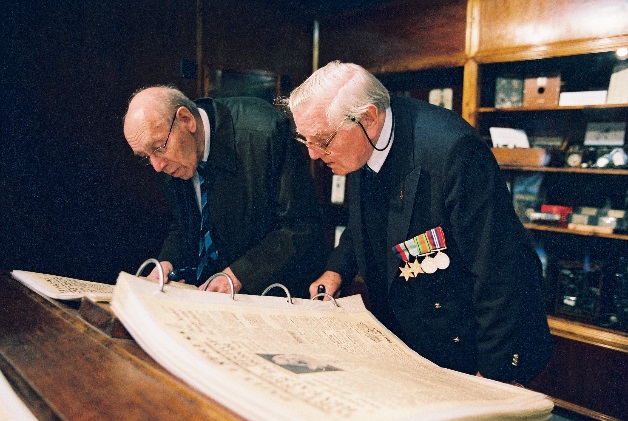
A phone call from Rog Stanton [ELMS Director] – “Would you like to go with Gordon Mellor (Comète evader 69 – navigator 103 Squadron), as a guest of the RAF for a two week journey from Brussels to Hernani, Northern Spain? The RAF will be retracing the aircrew evader route, cycling the route from Brussels to the Basque country, and then walking the route over the mountains, crossing the Bidassoa, and finishing at Florentino’s Memorial at Hernani. The RAF want to commemorate Comète and Andree de Jongh – and it starts in ten days! The chap running it is Sqn Ldr Al Green, assisted by RAF Historian Howard Tuck. Al Green will contact you.”
Abandoning all previous plans, Gordon and I were on board the 1236 Euro Star from Waterloo International on Sunday 01 July, looking forward to steps we had individually made back in September/October 1942 on our ‘Home-Runs’, courtesy of the Comète Line – the Belgian inspired escape line saved over 800 allied aircrew at a cost of over 200 of its members, and some 1000 more of various nationalities in concentration camps or prisons at the time of the liberation in May 1945.
The event began on Monday 2 July at the Basilique, Koeckelberg, Brussels, when the first contingent of some 20 personnel arrived from RAF Shawbury and RAF Cosford. Lead by Sqn Ldr AL Green, the RAF laid a poppy wreath in the Belgian Air Force/RAF Chapel in the presence of former Comète and veteran aircrew members.
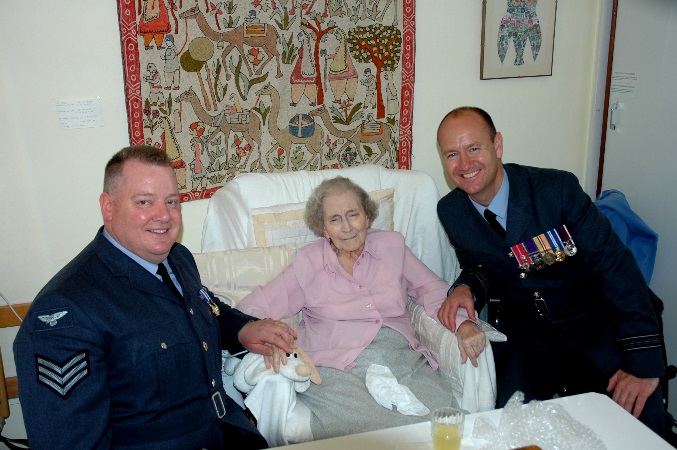
Al Green, with a small group of officers in uniform, then visited the nursing home of Andree de Jongh GM and presented her with an individual fine bone china tea set with the crest of the RAF on each item, in deep gratitude from the RAF. Dédée was made a countess for her leadership of Comète and for her many years of nursing lepers in Africa. A truly remarkable woman. The team now moved on to the Ecole Frederic de Jongh; Dedée’s father, (code name Paul), assisted Dédée with the line, and ran the line after her capture. Later he was to be captured and executed. Frederic had been headmaster at the school. The RAF laid a wreath on his memorial plaque and spoke to staff and students. In the evening, a commemorative dinner was held at the Astoria Hotel in Brussels. Al Green presided, and Standards from the RAF, Comète, and the RAFA (Belgium) were paraded. Principle guests were Mme Andree Dumont OBE (Nadine), Mme Contance Legoise, CdeG, Mme Janine de Greef, all Comète couriers, were among the many Comète veterans and guests of honour.
Tuesday 03 July: The contingent was now split into half, one half to proceed by coach on a ‘history day’ to the night halt, with the other half cycling the route to the same destination. The next day they would change roles. All team members had to prepare and deliver a short account as to the history of a particular place or ‘stand’ en route with Howard giving an overview of the situation. This first night stop was Corbie on the River Somme, east of Amiens, where Comète evaders had to cross the river by any means available, and some descendants of the original ‘boat owners’ came to visit the camp site where Gordon and I were learning about ‘rat packs’ [high energy service rations designed to self-cook and keep you going] – a far cry from the Horlicks tablets in our escape kits! Earlier in the day a poppy wreath had been laid at the ‘Stand’, a huge WW1 memorial – most poignant – in Picardie.
Wednesday 04, found me looking from my hotel bedroom window at the cyclists as they set off to ride to Chartres – no we did not sleep under canvas, we were spoilt rotten. It was embarrassing, but you soon got used to it, as for example, the next day when the stand was at Freteval, it was here in the forest that evaders unable to pass down the line were ‘encamped’ waiting for the invading Allied troops to liberate them. Here it was Gordon that recounted his memories. We were both seated whilst everyone else had to stand – spoilt! That night we were all in the Ibis at Chatellerault.
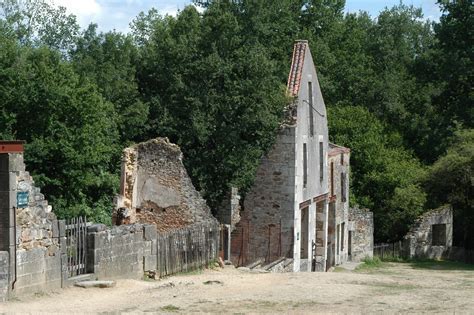
Friday 06 found us in the coach bound for Angouleme, this was interesting because we were able to talk with the young airmen who formed a large part of the first contingent, and so gather an insight into present day service life, and to answer some of our questions regarding our service. We were impressed by the smart turnout of these young men when taking their turn to lay wreaths, and now no longer ‘Fitters’ but ‘Propulsion Engineers’. A stop was made at Oradour sur Glane, village of infamy.
On to Bergarac for the 7th. We rode in the lead vehicle of the cyclists, one of whom set a speed record of 50mph whilst on a twisting downhill section. It was at Bergarac that we said goodbye to the first contingent and hello to the new personnel who joined us for the journey through the Basque country to Hernani. Now we began to appreciate more about ‘coms’, especially vital if you happen to be on active service. The changing face of operational duties brings all involved into the arena. After two days in Bergarac - home town of Cyrano – it was on to Mont de Marsan, with a rather unusual stand on the way, a winery. Here at Therac en Dordogne, Charles Martin, a Brit, farms his vineyard Chateau La Colline, and entertained us to a tour of wine tasting, much appreciated by all.
Tuesday 10th found us caught in the narrow streets of Biarritz before Rene Wilkinson, a civilian lecturer for the MOD, gave his talk on the Comète Line. Most appropriately his mother, Lucie Wilkinson, had been a courier with Comète. We then went into Bayonne, our home for the next three nights while the RAF set about crossing the Pyrenees and the River Bidassoa in the mountains on their way to Hernani.
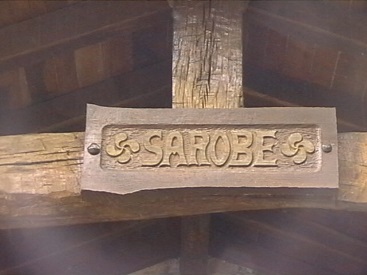
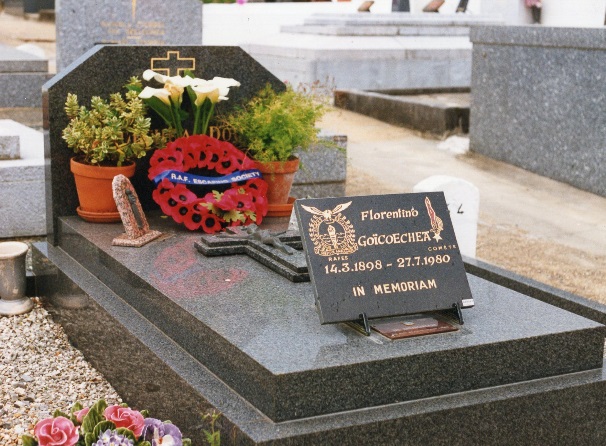
The cemetery at Ciboure just outside of St Jean de Luz, overlooking the sea with its backdrop of the mountains was the setting for the stand on the 11th, with Florentino Goikoetxea, Comète’s Basque mountain guide, as its subject. A fitting resting place for this man of the mountains and the sea. Not far away is the farmhouse at Bidegainberri in the foothills of the Pyrenees where Gordon and I had respectfully met Florentino, and where in January ‘43’ Dede de Jongh was to be arrested. It was from here that the crossing really began. It was now farewell to the walkers whose next night was to be spent in a field at Sarobe Farm, a halt used by later evaders.
We now returned to our hotel in Bayonne for the night before travelling to Sarobe the next morning (12th), to meet up with the airmen at Hernani in Spain. Hernani is the birthplace of Florentino, and it is here that a memorial bridge symbolising the crossing from France to Spain has been erected to commemorate those Basques who, like him, made the crossings possible. This bridge was the final stand, a wreath was placed by uniformed RAF officers, and Gordon and I recited the commendation ‘They shall not grow old’ and the Kohima Epitaph for the last time, and tribute was given to this legendary man in the presence of his family. We then walked to the nearby cider house where Joxean Goikoetxea, a cousin, runs a successful ‘press’, and we were entertained to a most satisfying lunch followed by accordion music played by Joxean. A very happy occasion.
Flying from Biarritz to Stanstead on Friday 13th, with every consideration shown to us, we brought our staff ride to an end. Our thanks go out to all who made it possible.
Bob Frost, A/Gunner
150 Squadron RAF
Comète evader 65.