2005 - Comete Trail - R Langley
Comète Memorial Trail – 24th and 25th September 2005
“Pugna Quin Percutias” (fight without arms), the motto of the Second World War escape line Comète, looks at first glance to be an oxymoron. But there is nothing contradictory about the achievements of the Belgian-run organisation which ensured that over 770 people – some say more – mostly aircrew, were returned to Britain to fight another day. Having been shot down over occupied Europe and evaded capture, the airmen were spirited away and passed down the line by Comète helpers from Brussels, through France and over the Pyrenees into Spain, a distance of nearly 700 miles. British consulates in Bilbao and Madrid then arranged for the airmen to be transported to Gibraltar, where the Royal Navy or RAF ferried them home.
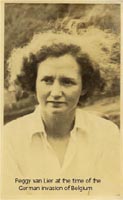
Peggy van Lier at the time of the German invasion of Belgium
My mother, Peggy van Lier, was 24 years old at the outbreak of war, and joined Comète when she met Baron Jean Greindl (codename Nemo). He secretly used his job of running a Swedish Red Cross canteen as cover for the Brussels end of the line, and she helped bring airmen into the capital from outlying places before taking them by train to Paris.
Comète blossomed – from July to October 1942 they brought out 54 airmen – but its success could not last. Word had reached German air force chief Hermann Goering, who knew only too well the value of returned airmen, and in November 1942, the Luftwaffe police infiltrated Comète and made numerous arrests. My mother was among them, but showing signs of innocence and speaking excellent German, she won over her Luftwaffe Police interrogator and was released.
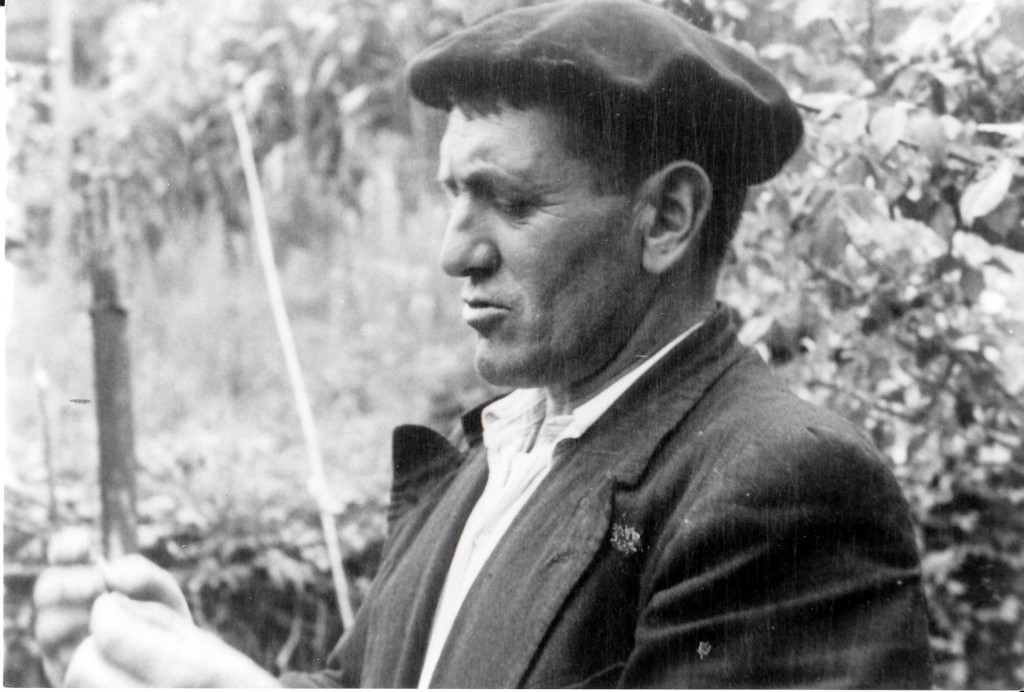
While fiercely independent, Comète had contact with MI9 in London and Nemo informed them that the Luftwaffe police might still suspect Peggy of involvement and that she must flee immediately. MI9 concurred, and with two other Belgians, cousins Georges and Edouard d’Oultremont, she left for Paris, continuing along the same route the airmen took with Comète to St Jean de Luz, a small fishing port in the shadow of the Pyrenees. It was here that Comète had secured the services of a tough Basque smuggler called Florentino Goicoechea, who was to become their most trusted and resourceful Pyrenees guide.
(After the war, when he was awarded the King’s Medal for Freedom at Buckingham Palace, King George VI asked him what he did for a living, “I’m in the import-export business”, Florentino replied).
Overnight, without any lights or hiking equipment, only espadrilles on their feet, Florentino took my mother and her companions up and down the French side of the Pyrenees, guided them to wade across the freezing cold River Bidassoa into Spain, up another steep climb before descending to a safe farmhouse were they collapsed, exhausted.
I had always wanted to retrace my mother’s footsteps and research on the internet led me to the website of the ELMS who organise the Comète walk as one of the Second World war ‘Memorial trails’ that they run every year. So with my friend Ian Harrison, and 106 other walkers from seven nationalities, nearly all family members of helpers or escapers, watched over by a handful of RAF veterans who had done the walk for real over 60 years ago, we laid our first wreath at the grave of Florentino (who died in 1980) in a beautiful ceremony overlooking the sea. Then the walk began in earnest, 26 miles over the next two days, led by Basque guides chirping away in their unique language, up and down 1500ft twice, blazing hot weather the first day as we climbed the ‘broad sunlit uplands’, to almost monsoonal the second.
A tap on my arm at the first lunch stop organised by our brilliant Basque hosts, an introduction, and I was embracing fellow walker Brigitte d’Oultremont, daughter of Georges, who had accompanied my mother in 1942. We walked the rest of the day together, wondering aloud how our parents would have felt, and crossed the river to be greeted by a white suited RAF veteran on the Spanish side. The delicious barbequed sardines and potent local cider lifted our spirits further.
At the end of the two days, everyone gathered for a final celebration lunch in a restaurant in the Spanish town of Renterria. The Basque contingent sang after the meal. Prompting one of our RAF veterans to lead some British singing in a slow, faltering voice: “Daisy, Daisy”, “Bless them all”, and a “Long way to Tipperary”. I am certain if he had sung anything by Vera Lynn, there really wouldn’t have been a dry eye in the house.
It was for me, a defining memory to the courage and spirit of Comète. This is what they fought for, without arms. But not without cost. Recorded total Comète losses during the war were 216 people executed, died under torture or in concentration camps. A fairer estimate, perhaps, is that for every successful evader, a Dutch, Belgian, French, or Basque helper gave his or her life.
Peggy van Lier reached Gibraltar, and was flown back to England by the RAF. She was met off the plane by the man destined to become her husband and my father, an MI9 officer from Room 900, the small unit responsible for escape and evasion lines in occupied Europe. He was ex-Coldstream Guards officer Jimmy Langley, who had himself escaped from France after being wounded and captured at Dunkirk in 1940.