2005 - The Cretan Freedom Trail - J White
The recce for the Cretan Freedom Trail started off badly and got worse! Our flight from Manchester being delayed from 1000 to 1500. We lifted off at 1510, only to return at 1600. This meant landing at night, and as our destination was not equipped for night landings, it meant a landing at Herakalion not Chania as planned. Take off now planned for 2200. Delayed again because of a security scare. We eventually arrived on Crete in daylight the next day, and after a three and a half hour drive to Chania where we miraculously met up with our contacts Paul Farley and Bert Crapo, both US servicemen from the US base on the Island, whom we had planned to meet the day before.
Taken now to Bert’s house, we sorted our kit out into rucksacks and set off for the hills straight away. The plan was to make a short foray into the hills where it was intended to spend the night just outside the Volikas Refuge near Mador. Unfortunately with no sleep for the last thirty hours, combined with the fierce heat of Crete, and crossing some of the most difficult countryside I have ever seen in my life, four hours of hard walking was enough for the first day. Any further walking had to be flat or descending. We now split into two groups, with an acceptable degree of safety. Two of us made for the road in the distance to recce the road route, and the remaining four to the ridge to find the original route. The day turned out to be difficult as we had to scramble and stagger down deep ravines and rock gardens from stones slipping underfoot to some boulders as big as small houses. In between, the sparse vegetation contrived to bite, scratch, and tear at any exposed flesh it could find. We made it to the road before it became too dark to continue. We brewed up some tea, sorted ourselves out, and collapsed into out sleeping bags a few metres from the road.
Woken next morning by goats wearing bells around their necks, we left our location and made for the road. The goat herder told us the village was just down the road, and we soon learned about Cretan estimates of distance. Four hours later we reached the village and replenished our water bottles. Needless to say most of our maps were inaccurate in the mountains. Our communications would not work either. Meanwhile the high level group had their own adventures.
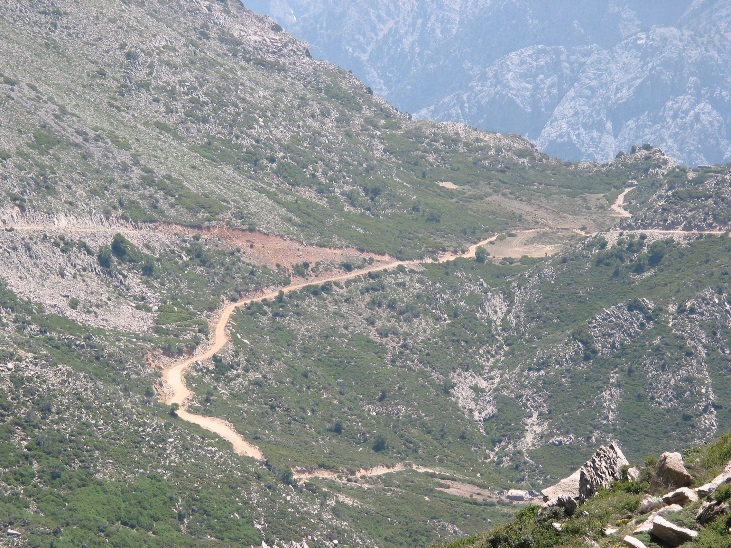
They had taken the high route, and were heading for the refuge of Katsiveli. Again very difficult terrain, often like a dusty lunar landscape, with orange dust, and snow on the tops. The maps again proved to be inaccurate, and the party ran out of water during the hot day. The RV point where water bottles could be replenished was reached, and found to have none. The ‘going’ was again very rugged with very difficult ground, but when darkness fell they were about three kms away from the nightime RV where again it was expected to find water to replenish their water bottles. They now melted snow for water, cooked a good meal by torchlight, and made the decision to remain where they were for the night in the open, rather than risk injury taking on the difficult rough terrain in darkness. They retired to their sleeping bags early.
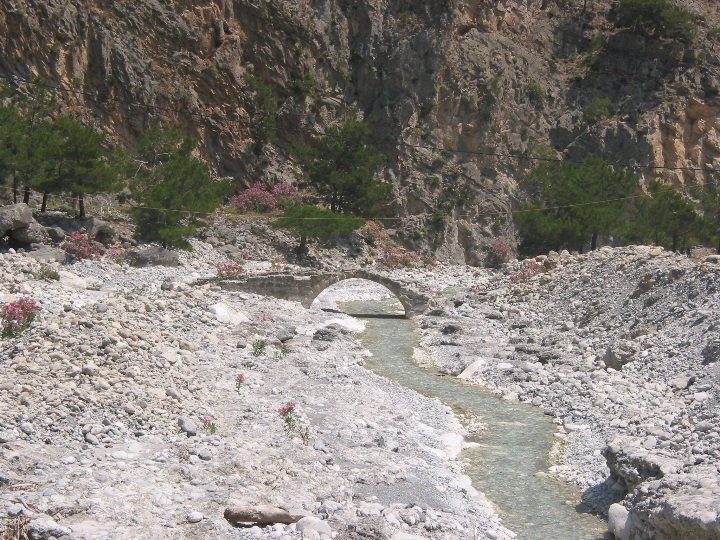
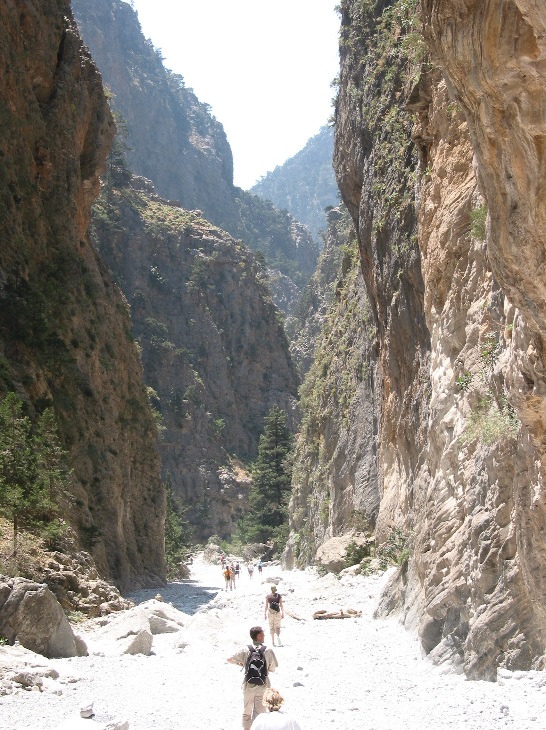
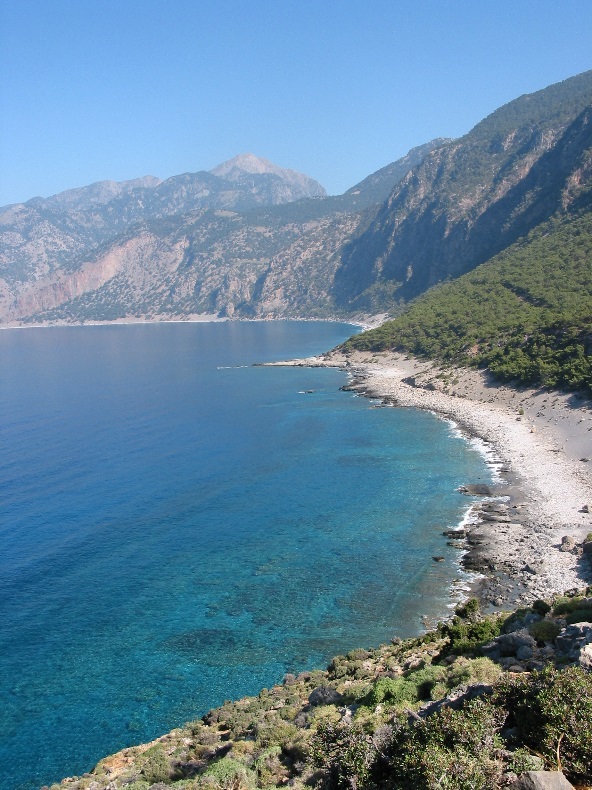
When, finally, both groups made contact we found that the high level group had been forced off the mountain because of bad weather on the tops. We had arranged an RV point at Omalos, to walk the Samaria Gorge part of the route next day. We started on the Gorge route at 0800, whilst the high level group started their route at the same time but from a different direction. We RVd two hours later at the abandoned village of Samaria where we celebrated with a drink of water together before heading for the village of Manos, a beer, and the opportunity to compare notes and route details so far. We had been unable to confirm the state of the coastal route from Agia Roumeli to Loutro, which had been part of the original route. We believed it would be possible, but it would be very hot with little chance of water replenishment and supplies on route. All would have to be carried. In the event, it turned out to be not as difficult as expected. At Loutra we were told that part of the original trail to Chora Sfakiuon had been swept away, although when walked it was found to be very easy and mostly still in place. That evening the whole party was reunited to compare notes on the routes recce’d. An ELMS wreath was laid on the war memorial at Chora Sfakion.
In conclusion, the recce got off to a difficult start because of flight delays and the loss of sleep. The terrain was found to be very difficult, mainly large rocks and boulders, very hot, and that, combined with our maps being inaccurate in the mountains, held the team up. The recce was a success, in that we have identified any possible problems in the area, have made good local contacts, and have located parts, if not all, of the original escape line route. Future team members need to be capable of living in wild desolate country, stony, dusty, and strewn with boulders. To add to the problem the temperatures are very high and acclimatisation may cause a problem. So long as team members are properly prepared for the conditions in the area, fit, and work well as a team, the event can now move forward to a full freedom trail next year. We also learned how wonderfully hospitable the local Cretan people are. Finally, well done to the team.